The Lawrence Hart Seminars
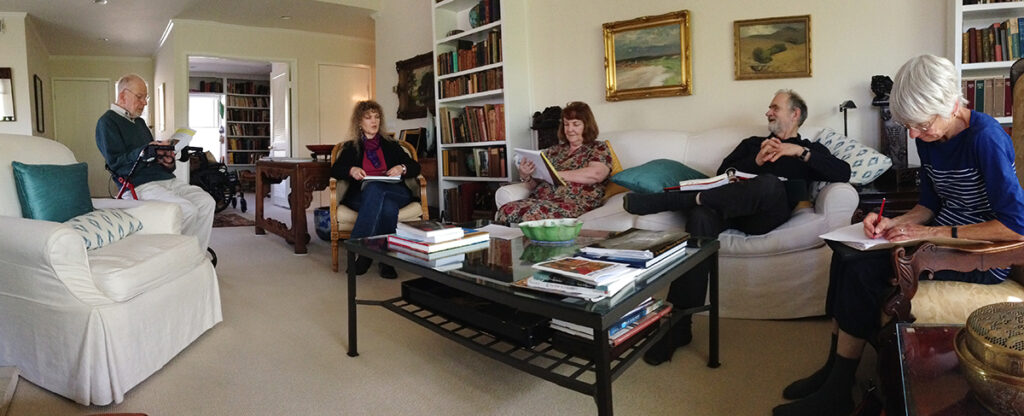
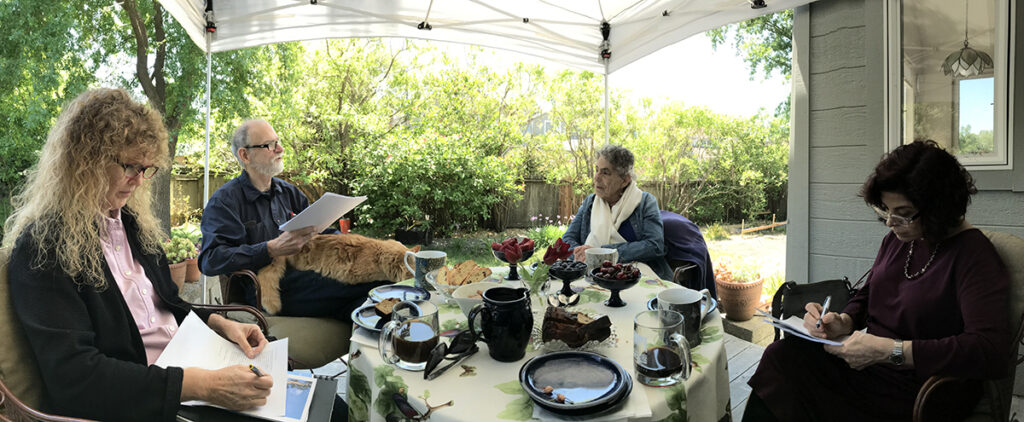
The Lawrence Hart Seminars are now, by far, the longest-running literary workshop in the San Francisco area. After the covid shock, they switched to a Zoom format and are now available online anywhere. In person or onscreen, poets continue to explore the rugged wilderness of language.
There is a modest tuition. Visitors are welcome. Poetic “sophistication” is not required—may even be a drawback. The essential thing is the willingness, even of published writers, to begin again: to try a new path toward the mastery of language. The path begins with immersion in the three classic Hart techniques: Direct Sensory Reporting, Double Imagery, and Poetic Statement.
Why retain this inherited pattern? John Hart says: “It’s experience. Decades of writing and reading have persuaded me that these three elements of the craft really are basics. They turn up in challenging poems; they turn up in the best political speeches; they turn up in mystery novels.” And his experiments as a teacher convince John that the three hurdles are best leaped in the order Lawrence Hart contrived.
Three tools: Direct Sensory Reporting
In Sensory Reporting, the writer deliberately sets aside vocabulary and uses the simplest possible words to convey selected details of what is seen. The exercise is as hard in practice as it sounds easy in theory.
This discipline is part subtraction, part addition. The takeaway part is simply the avoidance of all comparison, all speculation, all abstraction. The mere stripping down of language can give some pleasure, but risks growing dull. To make a description engaging, the writer adds a few sensory details, precisely and concretely observed. Here is Robert Frost:
Sprays of honeysuckle
That when they’re gathered, shake
Dew on the knuckle. [To Earthward]
Frost didn’t write “dew on me,” or “dew on the hand” or even “on the skin.” Prompted perhaps by the rhyme, the poet specified: “Dew on the knuckle.”
This device is useful in itself; a reader who is alert to it will find it working in fine fiction and non-fiction, in verse and prose. In the Hart approach, though, its essential job is to clear away junk. By forcing the writer to give up the props of cliché and conventional wordy description, this discipline clears the ground for the growth of further skills.

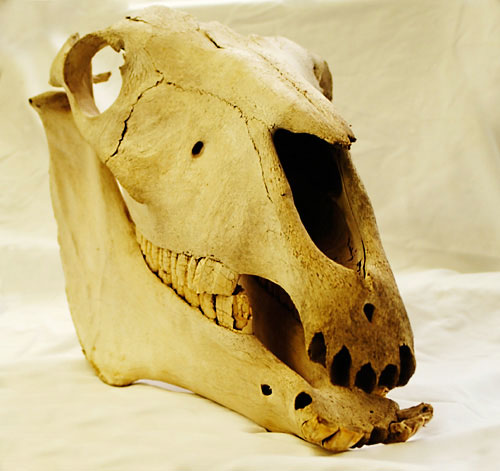
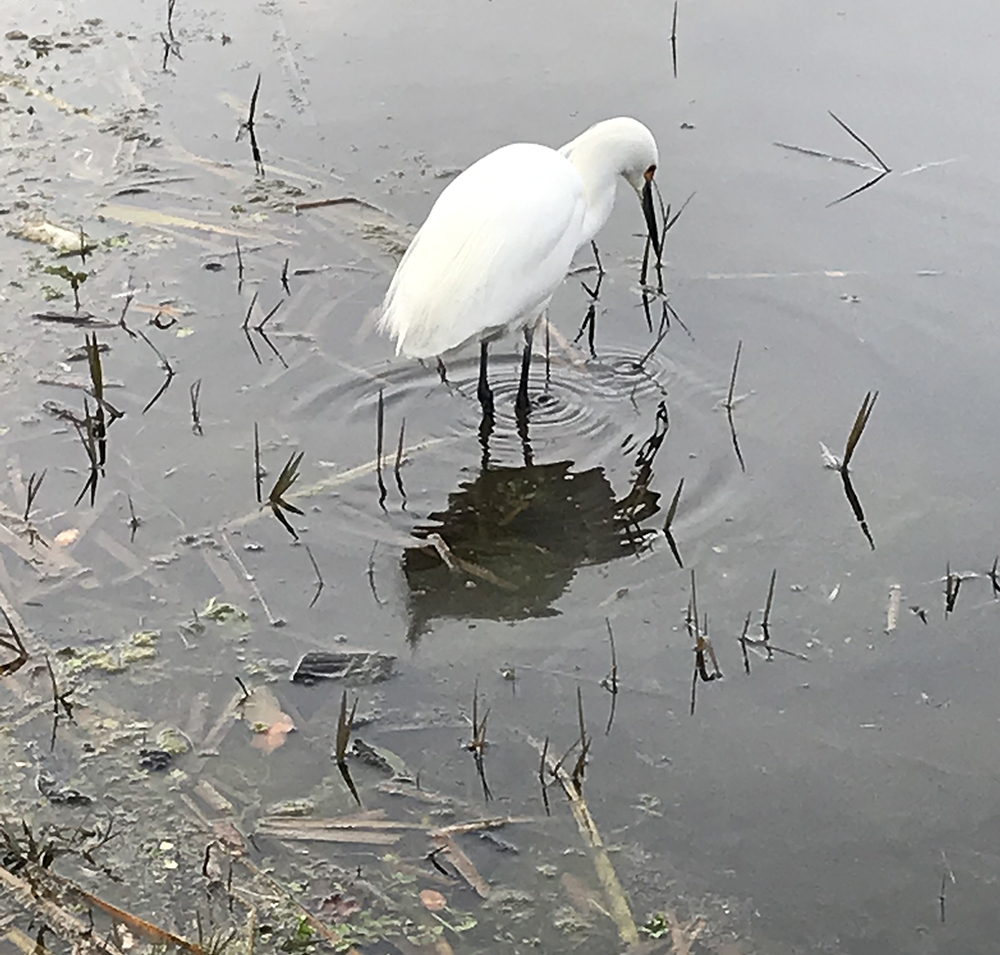
Frequent Direct Sensory Reporting subjects
Three tools: Double Imagery
After some months of the strangely difficult Sensory Reporting exercise, the student moves on to the second step: inventing original similes and metaphors, which are more usefully thought of as “double images.” The more surprising the objects brought together in the comparison, the more force it will have―if it doesn’t tip over into the ridiculous. The principle was defined more than a century ago by the dean of the French Surrealists, Pierre Reverdy:
[The image] cannot be born from a comparison but from a juxtaposition of two more or less distant realities. The more the relationship between the two juxtaposed realities is distant and true, the stronger the image will be—the greater its emotional power and poetic reality.
Images from literature range from combinations quite easily grasped, which might be called “semi-realistic,” to fantastic flights in which the original subject of the comparison almost disappears, called “romantic”:
And the golden seed of the fire [Edith Sitwell]
Hooves like great butterflies cross the yellow water [Fred Ostrander]
A South Wind that carries fangs, sunflowers, alphabets
and an electric battery with suffocated wasps. [Lorca]
Three tools: Poetic Statement
As they work, most students begin feeling the need to “say something” more directly. Poets of every era have struggled to express concepts in a way that makes us feel, rather than merely understanding, what is meant. Two key techniques are those Lawrence Hart identified as Cross Category and Simple Statement.
Cross-category works in a way that is obvious (once pointed out). The writer replaces an expected word with a parallel yet startling one, often from another realm of experience:
A mob that has not arrived at the black barrier
Where the machine guns wait to be insulted. [Waltrina Furlong]
The quibbling pebbles underfoot [Estelle Solomon]
“Quibbling” might be said to replace the more predictable “crunching” or “shifting,” and “insulted” deepens the underlying meaning of “confronted.”
Simple Statement, by contrast, is a formulation of idea boiled down to such a point that it resounds in the mind. Dante and Auden provide many examples:
I am Beatrice who send thee; I come from a place where I desire to return; love
moved me, that makes me speak. [Inferno, Canto 2]1
Their fate must always be the same as yours,
To suffer the loss they were afraid of, yes,
Holders of one position, wrong for years. [Auden, Venus Will Now Say a Few Words]
You have labored this long,
Come from your hiding and show forth your god. [Bonnie Thomas]
From lines to passages
After gaining skill in precise sensory description and the creation of bold, successful metaphors—usually followed by some exercises in statement—students burst the initial constraints and turn (or return) to writing whole poems.
They now confront the challenge built into the ground-up approach they have followed so far: how to make individually vivid phrases and lines work together in paragraphs and poems. The first leap—from line to integrated stanza—is often the hardest, especially for writers who like to do bold, concrete, metaphorical imagery.
A common method of nesting strong lines is to continually switch techniques, alternating, for instance, between dramatic imagery and more transparent description or statement. But prosaic filler is discouraged: all lines, in the “active” poem, do their share to keep the experience alive. “If you’re speaking French, you have to speak it all the time.”
Another exercise in stanza-building involves reproducing the grammar, the syntactic structure, of an existing poem. It is surprising how seldom this sounds like imitation.
A third, especially adapted to imagistic work, is Connotation Line. The principle is to choose metaphors so that the objects brought in as comparisons (the Bs of “A is like B”) have certain qualities in common, permitting them to chord rather than to clash. Take these lines from “Shipwreck” by Rosalie Moore :
Often in sleep turning or falling
A dream’s long dimension
I rock to a random ship:
The one like a broken loon,
Clapping its light and calling:
The one bug-black, signing its sign in oil;
The telegraph-tall, invented—
Moved by a whine of wires;
The Revenge riding its crossbar,
Raising its sword hilt:
Even if removed from context and simply placed in a list, all of the major words seem to form a landscape of disaster. In the last four lines, the series of cross-shapes—telegraph poles, crossbars, swords—is classic Connotation Line.
From passages to poems
Once the stanzas are made, they can be stacked in different ways. The larger structure may be a series of scenes, a narrative, even a quasi-logical argument. There may be an alternation of passages that linger on a scene, thought, or impression, and those that move the argument along. Ideally, the poem ends with some of its strongest lines.
What about form? The Hart curriculum doesn’t start with rhyme, meter, and other repetitive patterns, like the sestina or the pantoum, but it values them. Many participants are, or become, interested in these tools, and there is new work to be done here as well. What makes a metrical line rise above overly regular “doggerel”? How can rhyme be harnessed to produce fresh combinations, not hackneyed ones? Can a form be filled without falling back on weak words or lines in order to “follow the rules”? A cleanly executed sonnet or villanelle filled with high-octane language is a special kind of achievement.
1. Inferno 2, 67–73, translated by John Aitken Carlyle.
Seminar
The Lawrence Hart Seminars meet twenty times a year, on the second and fourth Saturday of each month except July and December: for two hours on Zoom, from ten to twelve Pacific time.
Interested? The first step is a no-obligation trial. We encourage auditing one or even two sessions before signing up. No writing sample or “credentials” required.
The first meeting in each month is for on-the-spot writing and is open to all. New members join experienced ones in a series of exercises. Tuition is $125 for five monthly sessions. Limited feedback (or more, by arrangement) is offered between dates.
The second meeting in each month is devoted to criticism and discussion at an advanced level; these sessions are invitational but open to audit without cost until full participation begins (then $125 additional per set of five).
For more info, email staff@lawrencehart.org or call 415-479-5435.